Cheap Eats in Davao: Carinderia and Street Food Guide
A carinderia meal in Davao City costs PHP 50–80 (early 2026) — one cup of rice and one viand, enough to keep a working adult fueled through an afternoon shift. For residents spending PHP 4,000–6,000/month (early 2026) on food, carinderias, street food stalls, and wet markets form the backbone of daily eating. This guide breaks down exactly where to eat cheap in Davao, what each option costs, and how to structure a monthly food budget that leaves room for rent and utilities. For the full monthly picture, the cost of living guide covers every expense category.
How Much Does Food Cost in Davao?
Food in Davao runs significantly cheaper than Manila or Cebu. Numbeo’s food price index shows Davao about 20% below Manila, and the gap is widest at the budget end. A carinderia plate with rice costs PHP 50–80 (early 2026) , street food skewers at night markets go for PHP 10–20 (early 2026) per stick, and a full meal at Roxas Night Market rarely exceeds PHP 80–150 (early 2026) . Home cooking with palengke ingredients brings the per-meal cost down to roughly PHP 35–55 (early 2026) . The monthly math depends entirely on which combination of these options a person uses, and how often restaurants enter the picture.
| Category | Range (PHP) | Notes |
|---|---|---|
| Carinderia (rice + 1 ulam) | 50–80 | Standard plate, most neighborhoods |
| Street food meal (Roxas Night Market) | 80–150 | 3–5 skewers + rice or sides |
| Home-cooked meal (palengke ingredients) | 35–55 | Per serving, includes gas/condiment cost |
| Budget restaurant (Penong's, Chippens) | 150–300 | With rice, drink, and tip |
| Mid-range restaurant (2 people) | 700–1,200 | Sit-down dining, shared dishes |
Estimates as of Early 2026. Actual costs vary by building, usage, and lifestyle.
For someone eating two carinderia meals a day and cooking a simple breakfast at home, the daily food cost lands around PHP 120–180 (early 2026) — roughly PHP 3,600–5,400 per month. That leaves room within a PHP 20,000 monthly budget for rent, utilities, and transport.
Carinderia: Where Davao Eats for Under PHP 100
Carinderias are small neighborhood eateries serving pre-cooked Filipino dishes behind a glass counter, rice on one side, five to ten viands on the other. Point at what looks good, take a seat on a plastic chair, and eat. No menu, no waiting. A plate with rice and one ulam runs PHP 50–70 (early 2026) at most neighborhood spots. Adding a second viand or extra rice pushes the total to PHP 70–100 (early 2026) .
The food rotates daily but follows familiar patterns: adobo (chicken or pork), sinigang na baboy, tinolang manok, fried bangus, pinakbet, monggo, fried chicken, and whatever fish came in fresh that morning. Portions are working-class sized — enough rice and protein to sustain a full shift.
Poblacion and Bajada. Carinderias cluster around the University of Mindanao campus along Bolton Street, along Uyanguren (now Ramon Magsaysay Avenue), and near SM City Davao. Prices here run slightly higher than outer areas. PHP 60–80 (early 2026) per plate, because of foot traffic from students and office workers. Several carinderias along C.M. Recto Street serve reliable lunch crowds daily. The Bajada and Obrero area guide covers the full neighborhood profile.
Matina and Ecoland. The stretch along Quimpo Boulevard and the side streets near the Matina IT corridor support dozens of carinderias catering to BPO workers on meal breaks. Prices average PHP 50–70 (early 2026) per plate. Ma-a Road between McArthur Highway and Quimpo has a dense cluster of budget eateries. BPO workers renting in Matina eat at these spots daily, proximity to the office means no transport cost added to the meal.
Toril and outer barangays. The lowest carinderia prices in Davao. Plates along the Davao–Digos highway in Toril and near Mintal market run PHP 45–65 (early 2026) , sometimes PHP 10–15 cheaper than central Davao. The downside: fewer options and earlier closing times (many shut down by 7pm).
Street Food and Night Markets
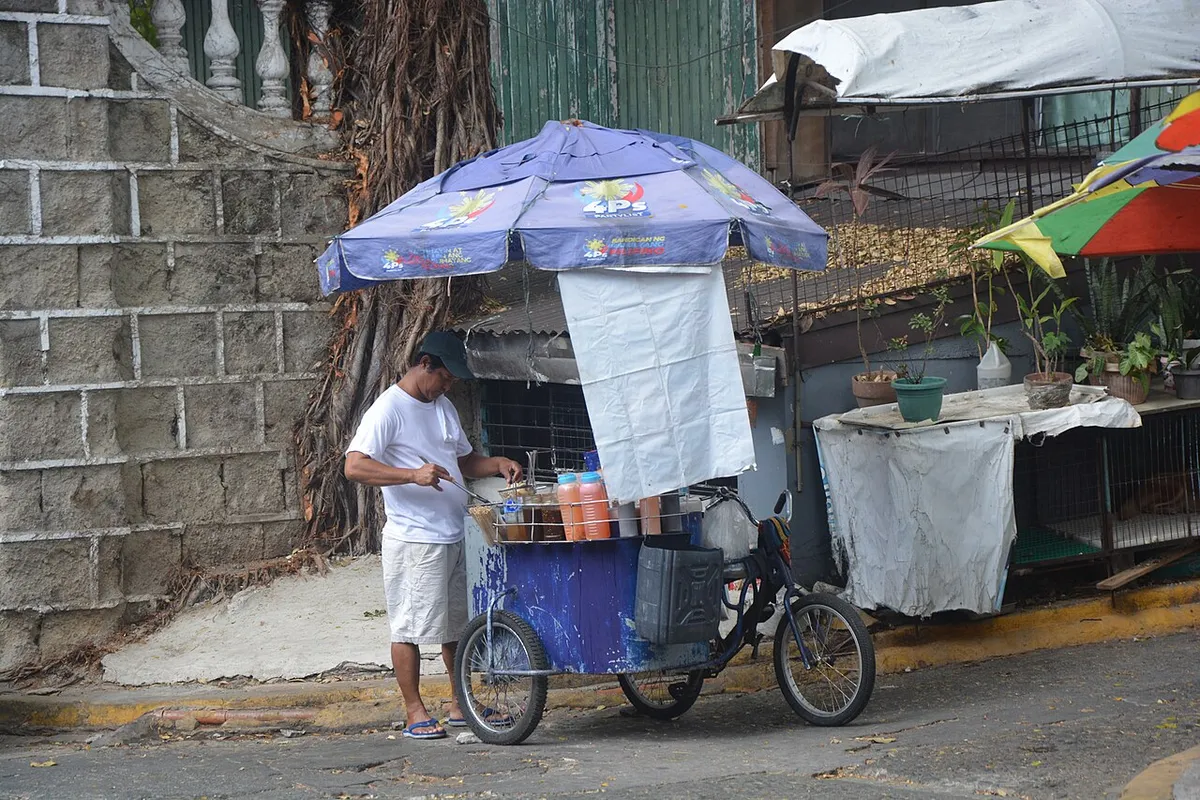
Davao’s street food scene centers on Roxas Night Market, a nightly open-air food market along Roxas Avenue in the city centre that runs from roughly 5pm to 11pm. Grilled meats, seafood, and Filipino snacks spread across dozens of stalls, most operating on a cash-only basis.
Roxas Night Market prices sit between carinderia and restaurant levels. Individual skewers, pork barbecue, chicken isaw (intestines), betamax (coagulated chicken blood), and chicken gizzard, cost PHP 10–20 (early 2026) per stick. A filling meal of 4–5 skewers with a cup of rice runs PHP 60–100 (early 2026) . Grilled seafood costs more: whole grilled squid at PHP 80–150 (early 2026) , grilled tuna belly at PHP 100–200 (early 2026) , and larger seafood platters at PHP 200–350 (early 2026) .
Beyond skewers, the market sells kwek-kwek (deep-fried quail eggs in orange batter) for PHP 20–30 (early 2026) per serving, fish balls at PHP 15–25 (early 2026) , and fruit shakes and smoothies for PHP 50–80 (early 2026) . Durian — Davao’s signature fruit — is sold by the kilo and by the piece at stalls near the market entrance, typically PHP 80–200 (early 2026) depending on variety and season.
Other street food spots. Bankerohan has a cluster of late-night carinderias and grilled food stalls near the public market, popular with jeepney drivers and market workers. The stalls along San Pedro Street near Ateneo de Davao University serve students on tight budgets. Agdao’s market area has its own strip of street food vendors, particularly along C. Bangoy Street.
Cooking at Home: Palengke vs Supermarket Math
Home cooking is the cheapest eating option in Davao — but only if ingredients come from a wet market rather than a supermarket. The price gap between Bankerohan Public Market and SM Supermarket or Gaisano Grand is consistent and significant on fresh goods.
| Bankerohan Palengke | SM / Gaisano Supermarket | |
|---|---|---|
| Rice (1 kg, regular) | PHP 42–48 | PHP 48–58 |
| Bangus (1 kg) | PHP 170–220 | PHP 240–300 |
| Pork liempo (1 kg) | PHP 280–340 | PHP 320–400 |
| Chicken (whole, 1 kg) | PHP 160–200 | PHP 190–240 |
| Tomatoes (1 kg) | PHP 40–70 | PHP 60–100 |
| Eggplant (1 kg) | PHP 40–60 | PHP 60–90 |
| Kangkong (bundle) | PHP 10–20 | PHP 25–40 |
| Eggs (1 dozen) | PHP 84–96 | PHP 90–108 |
The pattern is clear: fresh produce, fish, and meat run 20–40% cheaper at the palengke. Vegetables show the widest gap — kangkong at Bankerohan costs half or less of supermarket pricing. Fish and meat savings are more modest but consistent. Dry goods (rice, cooking oil, canned goods, soy sauce, vinegar) show minimal difference between palengke and supermarket, so convenience wins for those items.
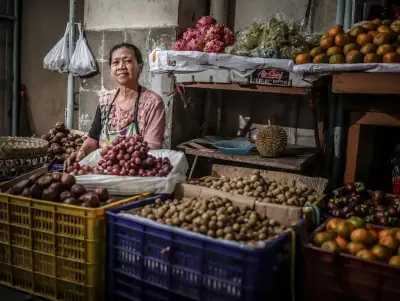
Bankerohan Public Market is Davao’s largest wet market, located near the Bankerohan Bridge along the Davao River. It operates 24 hours but is best for fresh goods between 4am and 7am when the day’s catch and harvest arrive. The fish section is the main draw, galunggong, bangus, tilapia, tuna, and squid at wholesale-adjacent prices. The vegetable section sources from farms in the Davao highlands and Bukidnon.
Agdao Public Market offers similar pricing with less crowding and shorter lines. For residents in the northern barangays (Agdao, Lanang, Sasa), it is more practical than the trip to Bankerohan.
A weekly palengke run of PHP 500–900 (early 2026) buys enough vegetables, fish, and meat for 14–20 home-cooked meals. Add rice at PHP 200–300 (early 2026) per week and cooking gas (LPG refill at PHP 500–900/month (early 2026) ), and the total home-cooking cost lands around PHP 3,500–5,500/month (early 2026) , the cheapest eating option in Davao by a clear margin. The grocery and palengke price guide has a full 16-item price comparison table for Bankerohan vs SM supermarket.
Monthly Food Budget by Eating Style
How much food costs per month depends on the mix. Here are three realistic scenarios for a single person in Davao:
| Category | Range (PHP) | Notes |
|---|---|---|
| Carinderia-heavy (2 meals/day out, simple breakfast at home) | 4,500–6,500 | PHP 50–80 per carinderia meal, toast/eggs at home |
| Home cooking (palengke ingredients, cook most meals) | 3,500–5,500 | Weekly palengke run + rice + LPG gas |
| Mixed (cook breakfast/dinner, carinderia lunch) | 4,000–6,000 | Most common approach for working residents |
| Restaurant-included (carinderia + 2 restaurant meals/week) | 6,500–10,000 | Adds PHP 300–600/week in restaurant spending |
Estimates as of Early 2026. Actual costs vary by building, usage, and lifestyle.
The mixed approach, cooking rice and simple meals at home while buying carinderia ulam for lunch, is what most budget-conscious residents default to. It balances cost, time, and variety. Someone earning PHP 18,000–25,000/month (early 2026) in a BPO role typically spends PHP 4,500–6,000 on food, keeping the allocation under 30% of income.
For students on tighter allowances, the carinderia-and-rice combination near campus stretches a food budget of PHP 3,000–4,500 further than any other approach. University of Mindanao, Ateneo de Davao, and UP Mindanao all have clusters of budget carinderias within walking distance.
Where restaurants fit. Occasional restaurant meals do not break a budget if they stay occasional. Penong’s BBQ (multiple branches, including Quimpo Boulevard and J.P. Laurel Avenue) offers grilled chicken and pork with unlimited rice for PHP 150–250 (early 2026) per person. Luz Kinilaw Place near Magsaysay Park serves kinilaw and grilled seafood at PHP 100–300 (early 2026) per dish, a step up from street food without reaching mid-range restaurant prices. Two restaurant meals per week at PHP 200–400 each add PHP 1,600–3,200 to the monthly food bill.
Seasonal Eating: When Food Gets Cheaper (and More Expensive)
Food prices in Davao follow seasonal patterns that budget eaters should track.
Durian season (August-October): Davao’s signature fruit drops from PHP 150–300 (early 2026) per kilo off-season to PHP 60–120 (early 2026) during peak harvest. Vendors at Bankerohan and along the Magsaysay fruit stalls sell whole fruits that would cost 3-4x more during lean months. Durian season coincides with Kadayawan Festival in August, when street food availability peaks across the city.
Vegetable surplus (June-November): Highland farms in Calinan, Marilog, and Bukidnon produce at full capacity during the rainy season, pushing kangkong, eggplant, squash, and camote tops to their lowest prices. Carinderia ulam options are more varied during this period because ingredients are cheaper.
Lean months (March-May): The hottest months bring two budget pressures, slightly higher vegetable prices as some highland crops slow, and higher electricity costs if you’re using AC. Food-wise, the impact is modest (PHP 500-1,000 more per month), but it stacks with other seasonal costs. The grocery guide details seasonal price swings by commodity.
Fish pricing stays relatively stable year-round thanks to Davao’s proximity to General Santos (the country’s tuna capital). However, the amihan monsoon (December-February) can cause brief price spikes when rougher seas reduce catches. Track weekly prices via the Department of Agriculture price monitoring.
Kung Asa Mokaon ang mga Taga-Diri
Eating in Davao does not require a restaurant budget. The combination of PHP 50–80 carinderia meals, PHP 10–20 street food skewers, and wet market produce priced 20–40% below supermarkets means a single person can eat well for PHP 4,000–6,000 per month — busog gyud na. The key variables are how often someone cooks versus eats out, and whether groceries come from the palengke or the supermarket. The PHP 20,000 budget guide puts these food costs into the full monthly picture with rent, utilities, and transport.
Frequently Asked Questions
- How much does a carinderia meal cost in Davao City?
- A carinderia meal in Davao costs PHP 50–80 as of early 2026. That gets you one cup of rice and one ulam (viand) such as adobo, sinigang, or fried fish. Adding a second viand or extra rice brings the total to PHP 70–100. Carinderias in outer barangays like Toril and Mintal tend to charge PHP 5–10 less per plate than those near malls or in Poblacion.
- What is the cheapest food at Roxas Night Market in Davao?
- The cheapest items at Roxas Night Market are grilled skewers (pork barbecue, isaw, betamax) at PHP 10–20 per stick and kwek-kwek at PHP 20–30 per serving. A full street food meal of 3–4 skewers plus rice costs PHP 50–80. Grilled seafood dishes run higher at PHP 100–300 depending on the type and portion size.
- Is it cheaper to cook at home or eat at carinderias in Davao?
- Cooking at home using palengke ingredients costs roughly PHP 35–55 per meal. Carinderia meals run PHP 50–80. Cooking is cheaper per serving but requires gas (PHP 500–900 per month for LPG), condiments, and time. Most budget residents combine both — cooking rice and simple dishes at home while buying carinderia ulam when it saves time.
- How much should I budget for food per month in Davao City?
- Monthly food budgets in Davao range from PHP 4,500–6,500 for carinderia-heavy eating, PHP 3,500–5,500 for mostly home cooking with palengke ingredients, and PHP 4,000–6,000 for a typical mix of both. Restaurant dining pushes costs to PHP 8,000–15,000 or more depending on frequency and restaurant type.
- Where is the cheapest place to buy groceries in Davao?
- Bankerohan Public Market offers the lowest prices on fresh produce, fish, and meat in Davao — typically 20–40% below supermarket prices. Agdao Public Market provides similar pricing with less crowding. For dry goods like rice, cooking oil, and canned goods, the price gap between palengke and supermarket narrows significantly, so convenience matters more.